Wholesale Kitchenware Manufacturing: Cut B2B Costs

Cookware supplier

The manufacturing process of 3 types of aluminum pots – Aluminum pot supplier

At present, the mainstream aluminum pots on the market are made by three processes, namely Die-cast aluminum pot, forged aluminum pot and Stretching aluminum pot . This article provides a detailed introduction to these three processes. Manufacturing Method Raw Material Forming Process Typical Products Advantages Notes Die-cast Aluminum Pot Aluminum alloy ingots (Al-Si series) High-pressure molten alloy injection Non-stick or decorative pots High precision, thin walls, complex shapes Best for mass production of intricate designs Forged Aluminum Pot Pure aluminum / Aluminum alloy sheet Stamping and stretching Medium- to deep-sized pots, soup pots Durable, uniform thickness, lightweight Suitable for regular-shaped pots Stretching Aluminum Pot Aluminum blank (coil or plate) Incremental deep drawing with annealing Deep, seamless pots like milk pans, soup pots Seamless body, smooth surface, structural stability Ideal for deep or regular-shaped cookware 1. Die-cast Aluminum Pot Manufacturing Process Die-cast aluminum pot is a kind of kitchenware obtained by die-casting process, which melts the aluminum alloy liquid into the mold cavity under high pressure and then forms after cooling. Its process is rigorous and interlinked 1.1 Selection of Aluminum Alloy Materials Aluminum cast aluminum pot commonly uses Al-Si series alloys (such as ADC12, A380), which have good fluidity, good
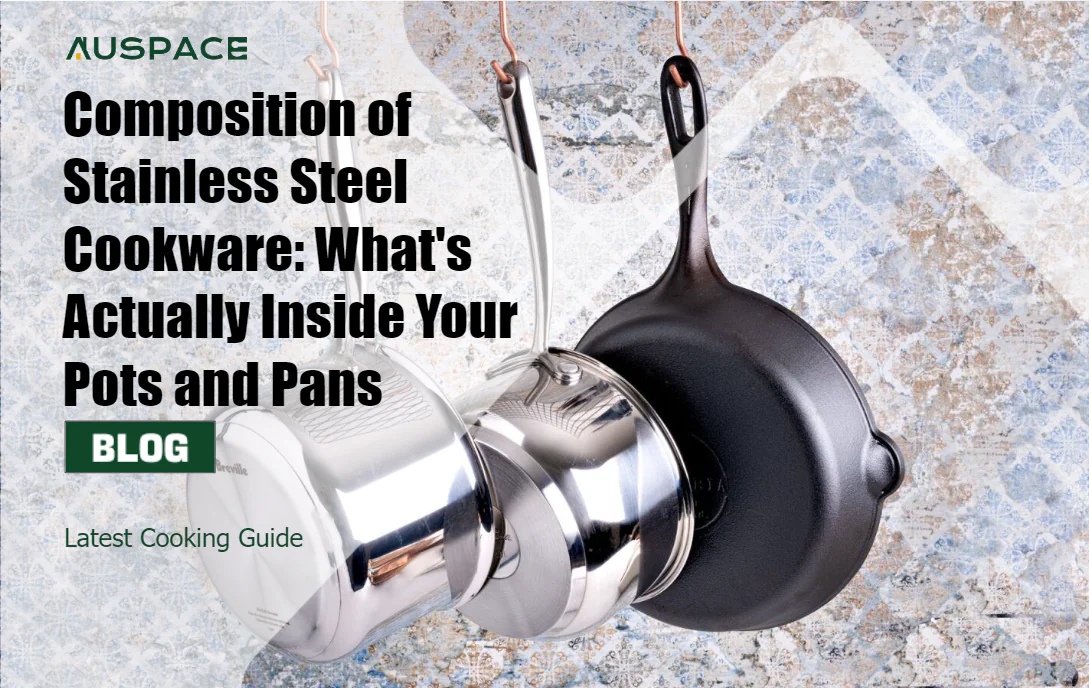
Composition of Stainless Steel Cookware: What’s Actually Inside Your Pots and Pans

I work at Auspace Kitchenware, where we manufacture and supply cookware to retailers and brands around the world. Part of my job involves working directly with stainless steel specifications, grade certifications, and factory quality standards on a daily basis. So when I say I know what goes into a stainless steel pot — I mean that literally. Most people pick up a pan, see “18/10 stainless steel” stamped on the bottom, and assume that tells them everything they need to know. It doesn’t. And some of what’s on that label might not even be entirely accurate — more on that in a minute. This guide is going to break down exactly what stainless steel cookware is made of, what those numbers and grades actually mean, and — most importantly — what to look out for when you’re shopping so you don’t end up with something that looks great on the shelf but disappoints in the kitchen. What Is Stainless Steel, Actually? Let’s start from the beginning. Regular steel is an alloy of iron and a small amount of carbon (usually around 1%). Carbon makes it stronger than pure iron, but steel on its own will rust — fast. Stainless steel

non-stick frying pan manufacturer China

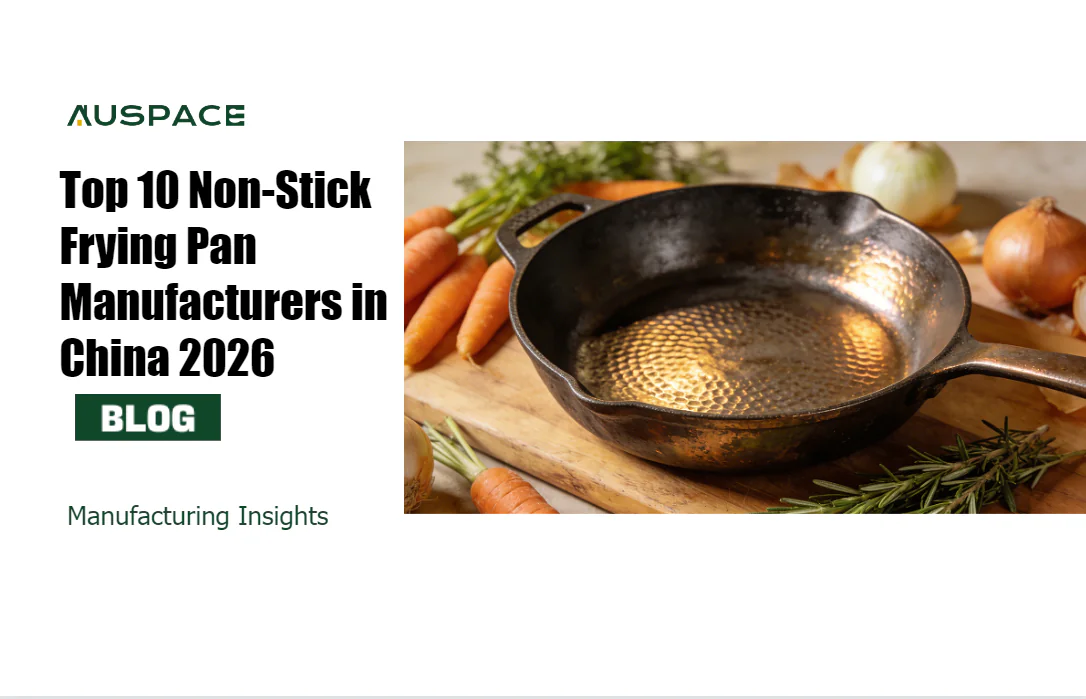
Top 10 Non-Stick Frying Pan Manufacturers in China 2026

Introduction The global cookware industry continues to evolve as consumers increasingly prioritize healthier cooking methods, efficient kitchen tools, and durable cookware solutions. Among all cookware categories, non-stick frying pans remain one of the most widely used products in both household and professional kitchens. Their ability to reduce oil usage, simplify cleaning, and improve cooking performance has made them essential for modern cooking. With the growth of global kitchenware markets, China has become the most important manufacturing hub for non-stick cookware. Thousands of factories across regions such as Zhejiang, Guangdong, and Jiangmen specialize in producing aluminum cookware, die-cast pans, stainless steel bases, and advanced coating technologies. For many international brands and distributors, partnering with a reliable non-stick frying pan manufacturer China is the most efficient way to secure high-quality cookware at competitive prices. Modern cookware production in China has moved far beyond simple mass manufacturing. Today’s leading non-stick pan factory operations integrate automated die-casting systems, robotic polishing equipment, and advanced coating lines capable of applying multi-layer non-stick coatings. These coatings include PTFE, ceramic, marble, and granite surfaces designed to improve durability and food release performance. At the same time, the global cookware market has seen rising demand for custom-designed products. Retailers

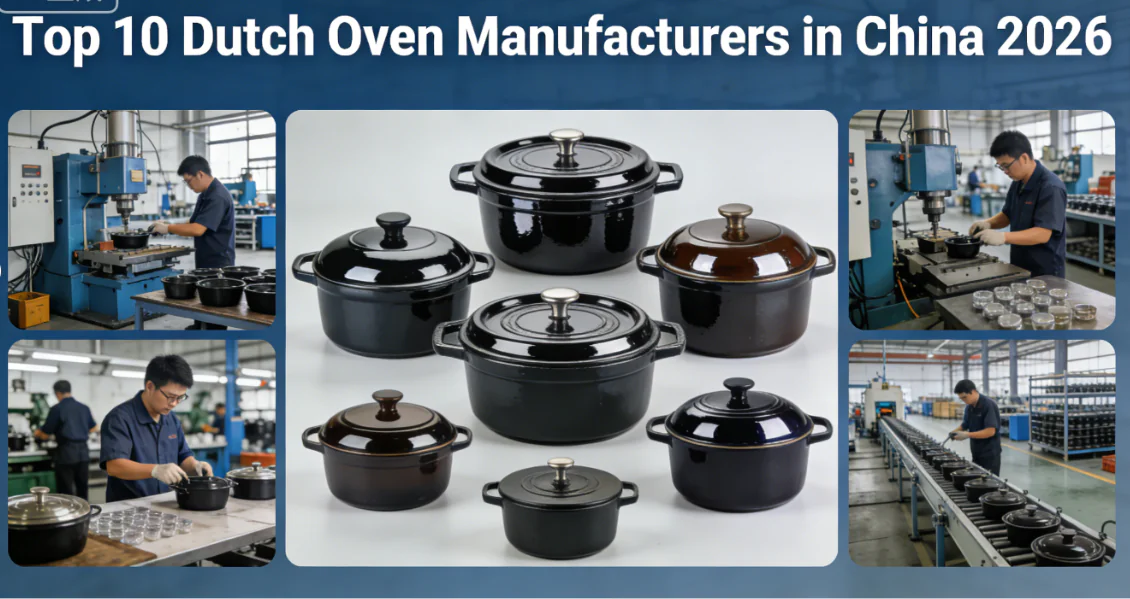
Top 10 Dutch Oven Manufacturers in China 2026

Top 10 Dutch Oven Manufacturers in China 2026

The global demand for premium cookware continues to grow as home cooking becomes more popular and consumers look for durable, high-performance kitchen products. Among the most sought-after cookware items is the Dutch oven, a versatile heavy-duty pot ideal for braising, baking, stewing, and slow cooking. For global brands, distributors, and kitchenware retailers, China has become one of the most important sourcing destinations. A reliable dutch oven manufacturer in China can provide high-quality cast iron cookware, advanced enamel coating technology, and competitive production costs. In this guide, we will explore the Top 10 Dutch Oven Manufacturers in China in 2026, explain how cast iron dutch oven wholesale sourcing works, and share practical tips for selecting the right enameled dutch oven factory China for your brand. Why Choose a Dutch Oven Manufacturer In China Over the past two decades, China has developed one of the most advanced cookware manufacturing ecosystems in the world. Many well-known international cookware brands rely on Chinese factories for OEM and private label production. There are several reasons why global buyers prefer to work with a dutch oven manufacturer in China. 1. Strong Manufacturing Infrastructure China has specialized industrial clusters dedicated to cookware manufacturing. These clusters provide access to raw materials,

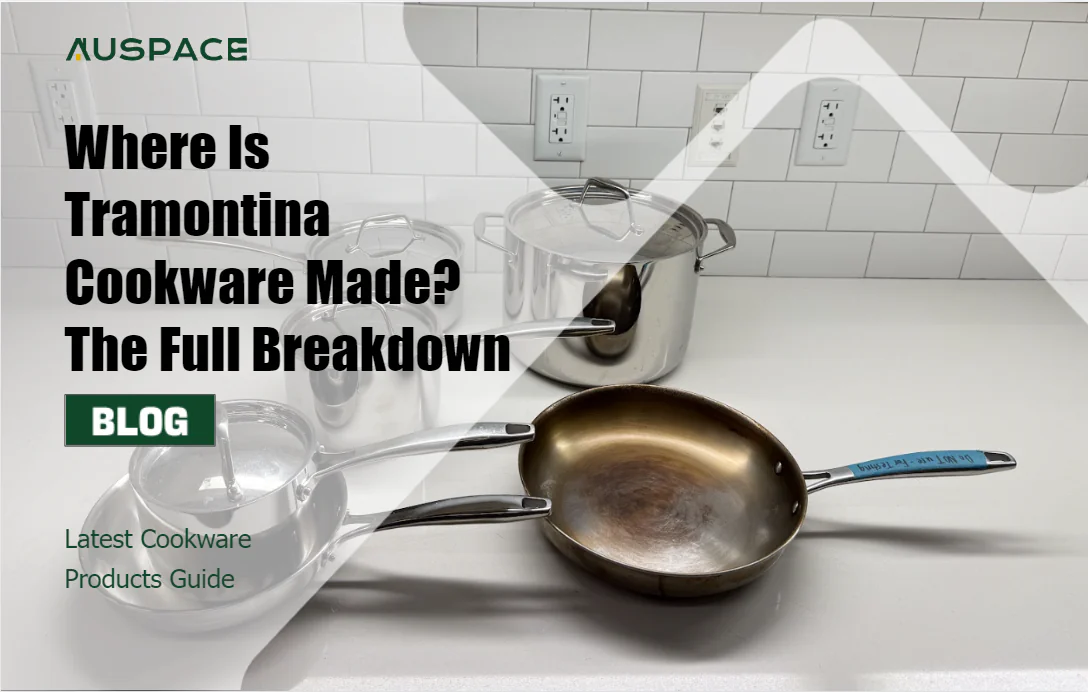
Where Is Tramontina Cookware Made? The Full Breakdown

I’ve spent years working in the cookware manufacturing and import/export business, so when people ask me about big brands, I can usually give them a real answer — not just what’s on the marketing page. Tramontina is one of those brands that comes up constantly, and the “where is it made” question is genuinely complicated. The honest answer is: it depends on which product you’re looking at and where you’re buying it. Let me walk you through everything I know. A Quick Background on Tramontina Before we get into the manufacturing locations, it helps to understand what kind of company Tramontina actually is. Tramontina is a family-run Brazilian metallurgical company founded in 1911 by Valentin Tramontina, the son of Italian immigrants. Headquartered in Carlos Barbosa, Rio Grande do Sul, their products are sold in over 120 countries. They’re the largest cookware and cutlery company in the Americas, with around 10,000 employees. That’s over 110 years in business. They make everything from cookware and cutlery to garden tools and kitchen appliances. For this article, I’m focusing purely on their cookware line. Tramontina Cookware Is Made in Multiple Countries This is the part that trips people up. Tramontina doesn’t manufacture everything in

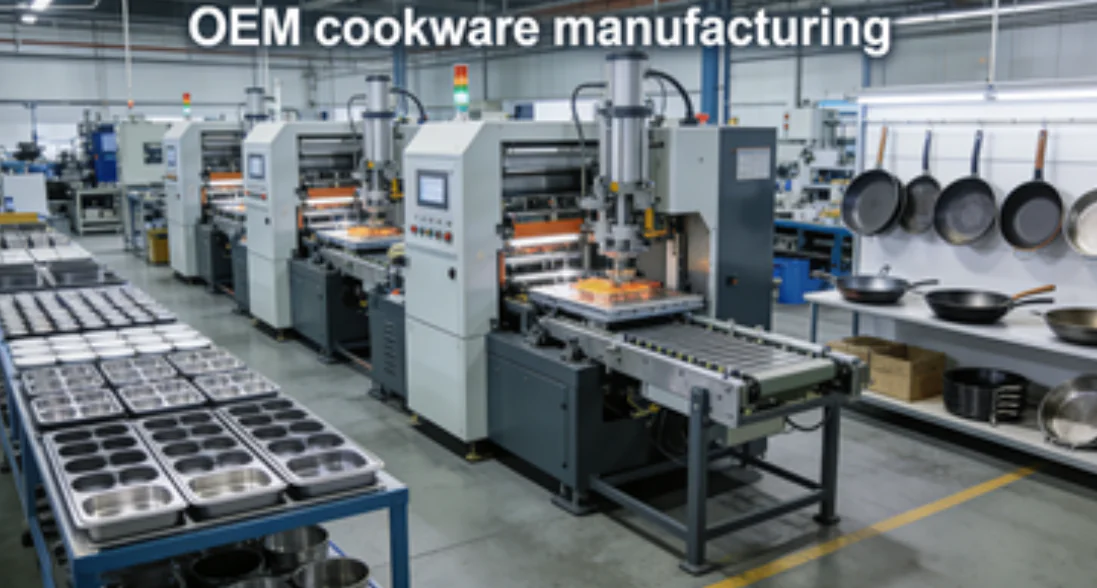
OEM cookware manufacturing

OEM Cookware Manufacturing: Custom Production Guide for Brands

The global cookware market continues to grow as consumers demand better performance, healthier materials, and stronger brand identities. For emerging brands, retailers, and distributors, building a product line from scratch can feel overwhelming. Manufacturing facilities require high capital investment, technical knowledge, and complex supply chain management. This is where OEM cookware manufacturing becomes a powerful solution. OEM allows brands to create fully customized cookware products under their own label—without owning a factory. From design and tooling to coating application and packaging, experienced manufacturers transform product concepts into market-ready cookware. This complete guide explains how OEM cookware manufacturing works, how it differs from other production models, what the process involves, and how brands can successfully launch custom cookware products. What Is OEM Cookware Manufacturing? OEM (Original Equipment Manufacturer) cookware manufacturing refers to a production model in which a factory produces cookware products according to a brand’s specifications. The brand owns the design, branding, and market positioning, while the manufacturer handles production. Unlike wholesale purchasing—where brands simply buy existing products and add a logo—OEM offers deep customization. Brands can define: OEM cookware manufacturing gives brands control over their product identity without requiring them to operate their own production facilities. Cookware OEM ODM Difference:

reliable cookware manufactures

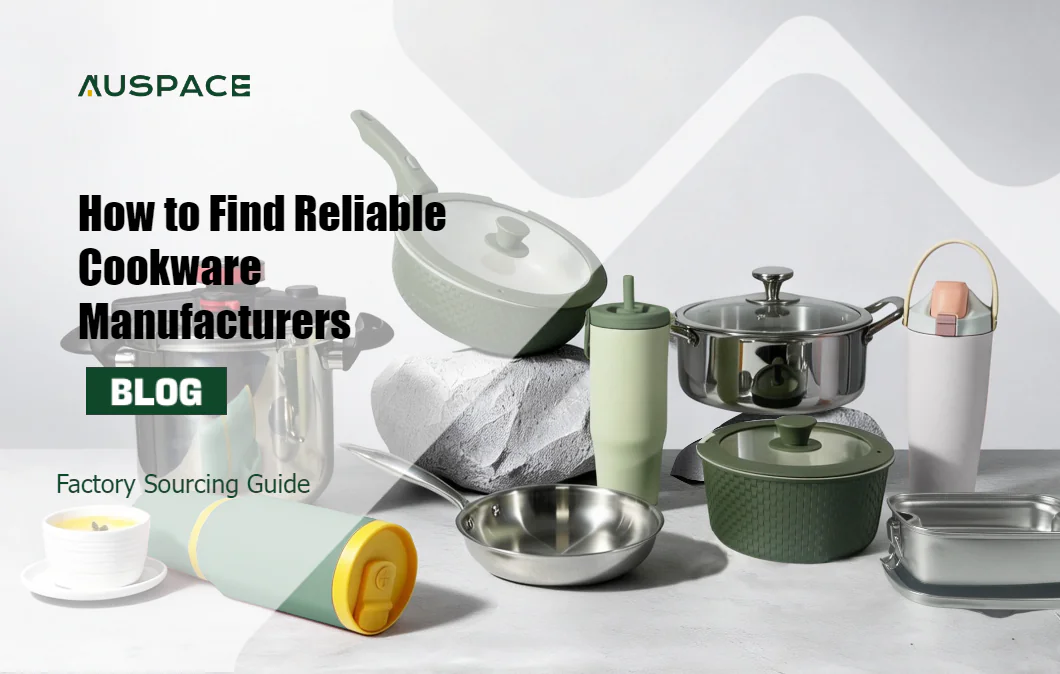
How to Find Reliable Cookware Manufacturers (Factory Sourcing Guide)

Introduction The cookware industry offers immense opportunities for brands ready to launch their own product lines—but success hinges on one critical decision: choosing the right manufacturing partner. With thousands of factories across China, Vietnam, and beyond, how do you separate world-class producers from unreliable suppliers who waste your time and money? This comprehensive guide walks you through every stage of the sourcing journey. From understanding why reliability beats rock-bottom pricing, to navigating supplier directories, vetting manufacturers, and managing quality control, you’ll gain actionable strategies used by professional importers. Whether you’re launching your first private-label collection or scaling an existing cookware brand, this cookware factory sourcing guide equips you with the knowledge to make confident, profitable decisions. 1. Why “Reliable” Matters More Than “Cheap” in Cookware Sourcing 1.1 The Hidden Costs of Choosing the Wrong Supplier The lowest quote rarely delivers the lowest total cost. When you partner with an unreliable cookware manufacturer, hidden expenses multiply quickly—substandard materials cause coating failures, warped bases trigger customer returns, and production delays force expensive air freight to meet retail deadlines . Compliance failures are even costlier; cookware that fails FDA or LFGB food contact standards can trigger product recalls and lasting brand damage . When you

private label cookware

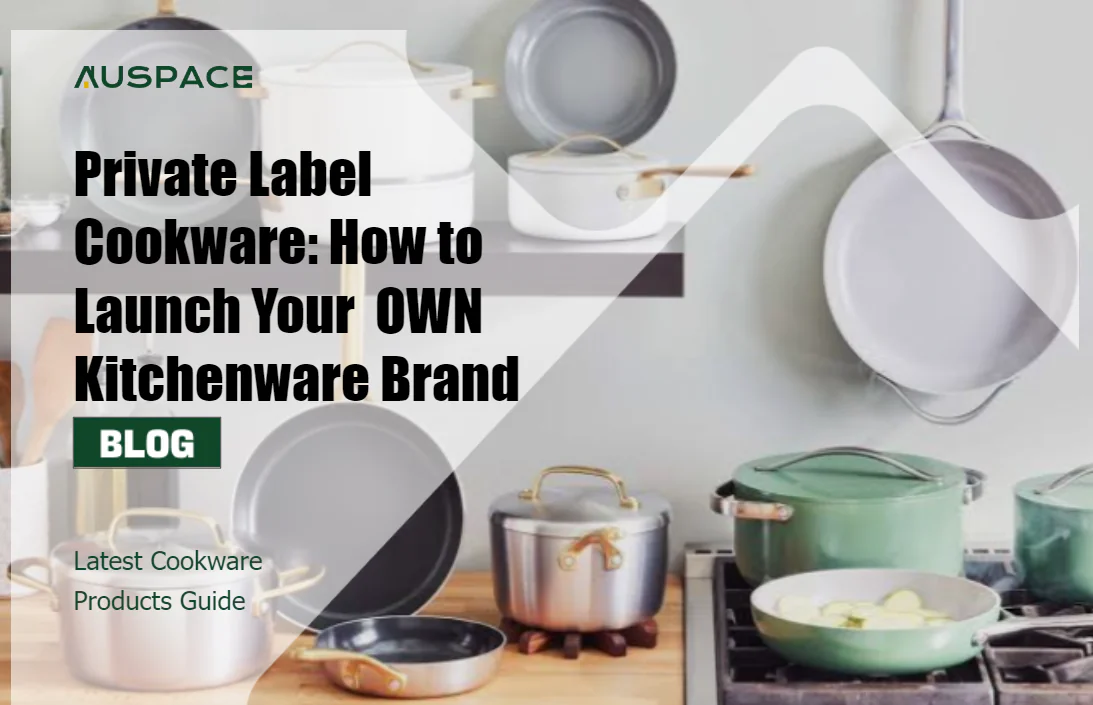
Private Label Cookware: How to Launch Your Own Kitchenware Brand

Introduction The global kitchenware industry is undergoing structural transformation driven by e-commerce expansion, direct-to-consumer brands, and evolving consumer expectations around quality and design. Entrepreneurs exploring how to start a cookware brand are no longer required to invest in heavy industrial infrastructure. Instead, private label cookware has become the dominant pathway for launching scalable, competitive kitchenware businesses. By working with a qualified label kitchenware factory, brands can leverage established cookware brand manufacture systems while focusing on branding, distribution, and margin optimization. 1. What Is Private Label Cookware and Why Is It the Foundation of Modern Cookware Brand Manufacturing? 1.1 What Are Private Label Cookware Products? Private label cookware refers to cookware products manufactured by an established production facility but marketed under your own registered trademark. The label kitchenware factory manages raw material procurement, forming, bonding, coating, polishing, assembly, and quality control. The brand owner controls positioning, pricing, branding, packaging, and channel strategy. For entrepreneurs researching how to start a cookware brand, this structure minimizes capital expenditure while retaining full brand ownership. Instead of building forging lines, coating tunnels, or polishing workshops, you integrate into an existing cookware brand manufacturing ecosystem. When starting a cookware line, this approach allows rapid product development

cookware quality control

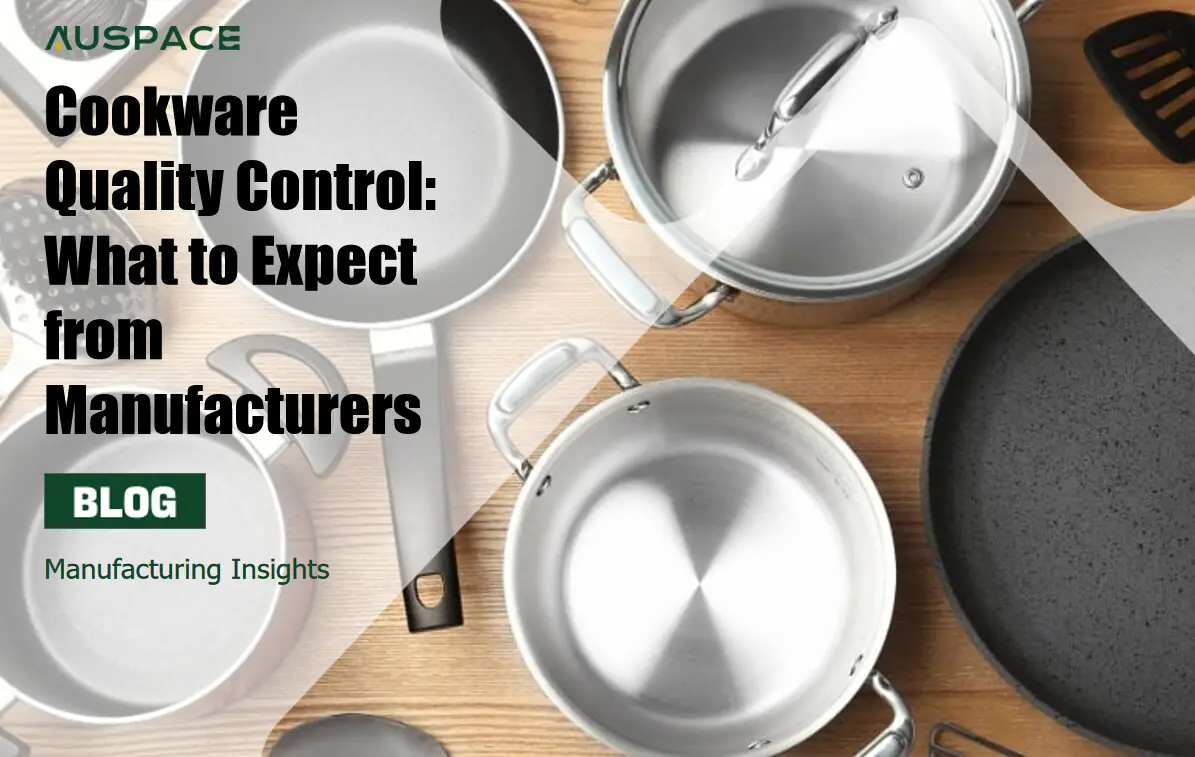
Cookware Quality Control: What to Expect from Manufacturers

Cookware is an essential part of both home and commercial kitchens, with its quality directly impacting food safety, user experience, and long-term health. For consumers, retailers, and distributors, understanding cookware quality control and manufacturer responsibilities is key to making informed decisions. Cookware quality control is not a single final check but a systematic process throughout the entire manufacturing cycle—from raw material procurement to finished product delivery. This article explores core aspects of cookware quality control, addressing factory inspection processes, manufacturing quality control, testing standards, certifications, checklists, third-party inspections, and defect rate standards. At its core, cookware quality control ensures products meet predefined safety, performance, and durability standards. Manufacturers bear primary responsibility for rigorous QC measures, as oversights can result in harmful substance leaching, premature failure, or poor performance. Global food safety attention has tightened standards worldwide; for example, the U.S. FDA has warned against imported cookware with excessive lead leaching. Different materials (stainless steel, aluminum, ceramic, non-stick) require specialized QC protocols, and below is a detailed breakdown of key components. Quality Control in Cookware Manufacturing: A Full-Cycle Approach Reliable manufacturers implement full-cycle QC, integrating checks into three key phases: raw material, in-process, and finished product control—avoiding over-reliance on end-of-line testing

how to import cookware from China.jpg

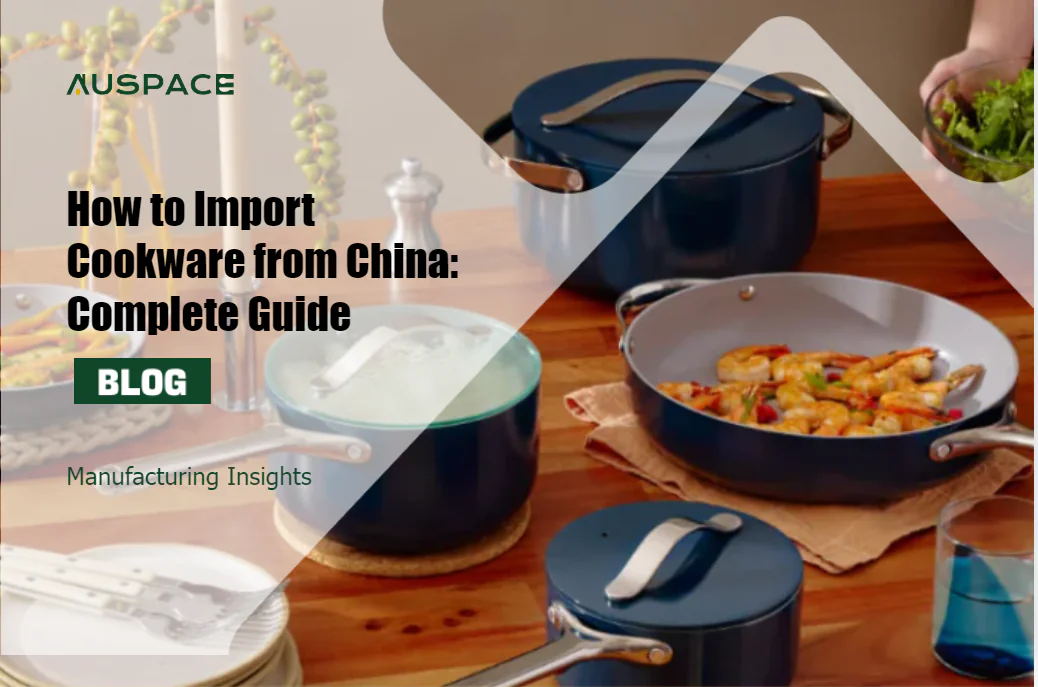
How to Import Cookware from China: Complete Guide

Introduction If you’re new to sourcing, how to import cookware from China can feel like a maze: materials, coatings, packaging, factory terms, shipping, and customs all at once. The good news is you don’t need to “know everything.” You need a repeatable process and a few checkpoints that catch the expensive mistakes early (wrong spec, missing documents, failed testing, or surprises at clearance). This guide breaks how to import cookware from China into practical steps you can follow, even on your first order—without jargon, and without pretending every buyer has the same market rules. Table of Contents 1. Start with a clear plan — how to import cookware from China without losing money Before you message suppliers, define your first order like a small project. Your goal is not “find the cheapest pan.” Your goal is a China cookware import guide you can reuse: a spec sheet, a cost model, a timeline, and a document list. That’s the fastest way to learn how to import cookware from China without paying “tuition” on every mistake. A simple starter plan (use it as a checklist): If you treat your first order as a “pilot,” you’ll learn how to import cookware from China

How Is Stainless Steel Manufactured? A Comprehensive Guide

Stainless steel has become an indispensable material in modern life, from kitchen cookware to medical instruments, architectural structures to automotive components. But how exactly is this remarkable alloy produced? This guide explores the complete manufacturing process of stainless steel, its history, and where it’s made around the world. What Is Stainless Steel? Stainless steel is an iron-based alloy that contains a minimum of 10.5% chromium, which forms a protective chromium-oxide layer on the surface. This passive layer gives stainless steel its signature corrosion resistance and “stainless” quality. The alloy typically contains iron, chromium, and varying amounts of other elements such as nickel, molybdenum, silicon, and carbon (usually no more than 0.12%). There are more than 57 standard stainless steel grades recognized globally, plus numerous proprietary alloys developed by manufacturers. These fall into four main categories: austenitic, ferritic, martensitic, and duplex stainless steels, each with distinct properties suited for specific applications. When Was Stainless Steel First Manufactured? While chromium’s protective properties were recognized as early as 1821 by French scientist Pierre Berthier, the first true stainless steel wasn’t manufactured until the early 20th century. On August 20, 1913, English metallurgist Harry Brearley created the first recognized stainless steel at the Brown-Firth

Iron Cookware Manufacturing in China: What Global Buyers Need to Know

Introduction As the culinary world increasingly embraces traditional cooking methods, iron cookware manufacturing, particularly in the form of woks, has gained prominence. Renowned for their durability and exceptional cooking properties, iron woks have become a staple in kitchens worldwide. This article delves into the intricacies of iron cookware manufacturing in China, offering global buyers insights into the production processes, quality control measures, and customization options available. Understanding these elements is essential for organizations looking to source high-quality iron woks and navigate the evolving landscape of sustainable cookware. 1. What is Iron Cookware Manufacturing? Understanding the Basics Iron cookware manufacturing refers to the production process that brings various types of iron cookware, most notably woks, to the market. This process involves several stages, including material selection, casting, finishing, and quality control. Iron cookware is renowned for its durability, heat retention, and healthy cooking properties, making it a popular choice among chefs and home cooks alike. At its core, iron cookware manufacturing leverages the inherent properties of iron, allowing for optimal heat distribution and the ability to withstand high cooking temperatures. This sector has gained immense popularity, particularly in regions where traditional cooking methods are favored. With increasing globalization, countries like China

Cookware supplier

The manufacturing process of 3 types of aluminum pots – Aluminum pot supplier

At present, the mainstream aluminum pots on the market are made by three processes, namely Die-cast aluminum pot, forged aluminum pot and Stretching aluminum pot . This article provides a detailed introduction to these three processes. Manufacturing Method Raw Material Forming Process Typical Products Advantages Notes Die-cast Aluminum Pot Aluminum alloy ingots (Al-Si series) High-pressure molten alloy injection Non-stick or decorative pots High precision, thin walls, complex shapes Best for mass production of intricate designs Forged Aluminum Pot Pure aluminum / Aluminum alloy sheet Stamping and stretching Medium- to deep-sized pots, soup pots Durable, uniform thickness, lightweight Suitable for regular-shaped pots Stretching Aluminum Pot Aluminum blank (coil or plate) Incremental deep drawing with annealing Deep, seamless pots like milk pans, soup pots Seamless body, smooth surface, structural stability Ideal for deep or regular-shaped cookware 1. Die-cast Aluminum Pot Manufacturing Process Die-cast aluminum pot is a kind of kitchenware obtained by die-casting process, which melts the aluminum alloy liquid into the mold cavity under high pressure and then forms after cooling. Its process is rigorous and interlinked 1.1 Selection of Aluminum Alloy Materials Aluminum cast aluminum pot commonly uses Al-Si series alloys (such as ADC12, A380), which have good fluidity, good
Submit Your Sourcing Request

If you have a procurement list, please upload the file (size under 5MB).